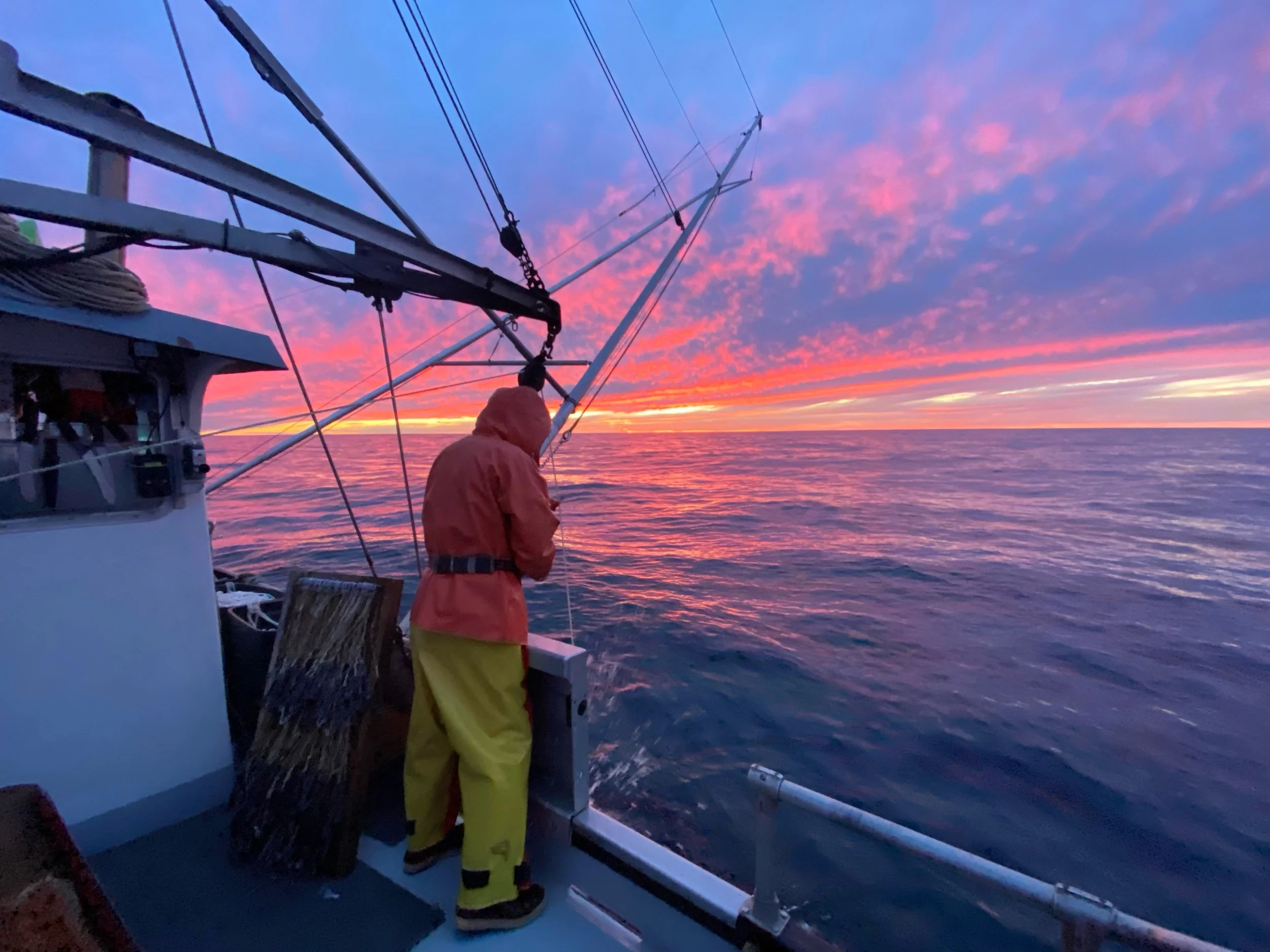
New study: Red Chris mine leaking toxicants into Stikine River headwaters

Salmon Beyond Borders

April 3rd, 2025

By Mary Catharine Martin

Salmon Beyond Borders calls for ban on mine waste dams along transboundary rivers

JUNEAU, ALASKA—A disturbing report recently released by Canadian conservationists has revealed that Canada’s massive Red Chris copper-gold mine, located in Tahltan Territory in northern British Columbia (B.C.), Canada, is contaminating groundwater, creeks, and lakes in the upper reaches of the Iskut River, the largest tributary of the transboundary Stikine River. The Stikine, North America’s fastest free-flowing navigable river, flows into the United States at the community of Wrangell, Alaska. It is a critical salmon producer for both countries, serves as key habitat for a wide array of wildlife, and has been both home and a trade route for Indigenous peoples for thousands of years.

The report details an investigation conducted by Terrace, B.C.-based organization SkeenaWild Conservation Trust, mostly using data that is not readily available and was obtained through Freedom of Information Act requests. Report findings include that critical fish habitat near the mine has been destroyed and the seepage of contaminants like selenium and copper from the Red Chris Mine’s waste facility and waste rock piles is higher than predicted and could negatively impact aquatic life. The levels of selenium detected in fish tissue in nearby lakes are increasing and could be harmful to the fish and to the humans eating them. At elevated levels, selenium can cause mutations and death in fish and other animals. The impacted water bodies are an important source of food, clean water, and ways of life for residents of Iskut and the surrounding communities in Tahltan Territory, Northwestern B.C.

Read full article here
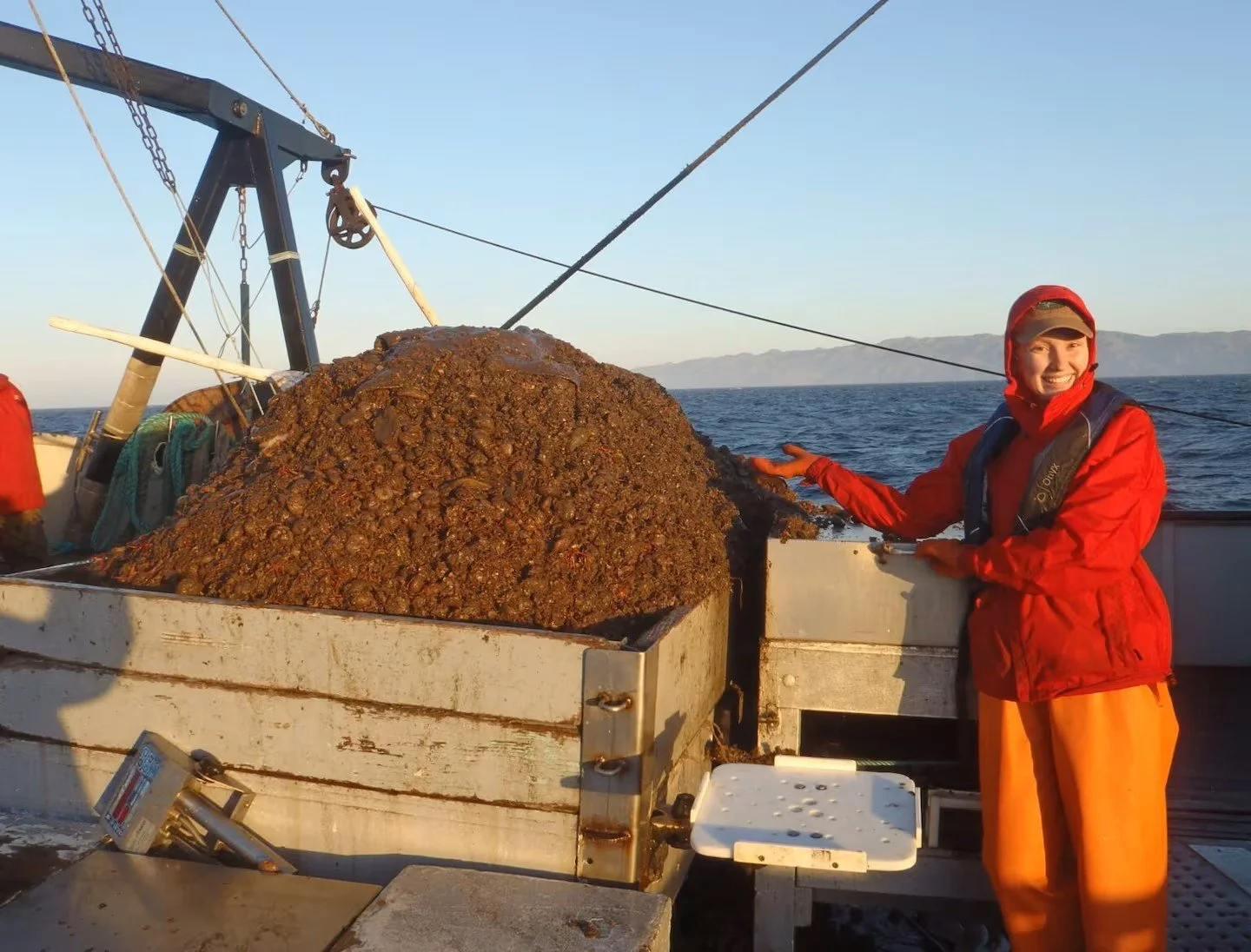
Science supporting Alaska seafood industry threatened by federal firings, biologists and fishermen say

Science supporting Alaska seafood industry threatened by federal firings, biologists and fishermen say

Rebecca Howard is a marine biologist who spent six years in graduate school — largely funded by federal scholarship dollars — to earn a doctorate at Oregon State University. Last April, she was hired by the National Ocean and Atmospheric Administration’s fisheries branch to join in annual surveys off Alaska that gather data vital to the management of the nation’s biggest seafood harvests.

Federal Workforce and Budget Cuts

Federal Workforce and Budget Cuts

The Alaska Longline Fishermen’s Association stands in strong support of NOAA/NMFS's mission and commitment to sound science.  Our fishermen rely on timely and accurate weather data for safety and trip planning; we rely on comprehensive resource surveys and sound science as the basis for fisheries management.

Remembering Tad Fujioka

Remembering Tad Fujioka

Tad was brilliant. He was also humble and kind. He could solve any problem and would drop everything to help a friend. He committed hours to research and data analysis, but took every opportunity to express gratitude to anyone else who worked for our fleet or helped in any way. Tad was an active ALFA member, always jumping in to help at every event. He was on the board of the Alaska Sustainable Fisheries Trust and board chair of the Seafood Producers Cooperative. He gave freely of his time, expertise and incredible facility with numbers and data. No one can fill the hole he has left in our community. 

OPINION: Canada’s rubber-stamp mining decision could endanger Alaska salmon

Anchorage Daily News

By Brian Lynch

September 24th 2024

On July 26, KSM Mining ULC, a wholly owned subsidiary of Seabridge Gold, Inc. received its “substantially started” determination from the British Columbia Environmental Assessment Office for its Kerr-Sulphurets-Mitchell (KSM) project. KSM is a huge proposed open-pit and underground gold-copper-silver mine targeting coastal mountains of northwestern B.C., within the headwaters of both the Nass River, which lies entirely within B.C., and the transboundary Unuk River which flows into Southeast Alaska near Ketchikan.

Why does this matter? According to B.C. regulations, an Environmental Assessment Certificate is the key overarching permit required for a reviewable development project to go forward. With the Certificate comes a stipulation that the project must be “substantially started” within 10 years, with an opportunity for a one-time five-year extension. The rationale behind the 10-year stipulation is that environmental analyses and the studies on which they are based should be relatively current. If a project is not launched in a reasonably timely way, environmental reviews, and the studies on which they are based, should be revisited to consider changing circumstances, new data, evolving environmental concerns, etc.

However, if a project is deemed “substantially started” by the specified deadline, the Environmental Assessment Certificate remains in effect for the life of the project, be it many years or even many decades. Substantially started determinations pose a significant environmental risk to downstream communities by fixing Environmental Assessment Certificates and project approvals in time, regardless of climate change, new scientific information, cumulative impacts, or significant regulatory reforms. For KSM, because of this determination, its certificate now has essentially permanent status.

Read full article here

Representatives Peltola and Carter introduce Domestic Seafood Production Act to support U.S. fishing communities

Don’t Cage Our Oceans

Casey Willson

August 1st, 2024

The Act enhances seafood processing infrastructure and capacity in coastal communities, while blocking the development of industrial finfish farms in federal waters.

On July 30, 2024, Congresswoman Mary Peltola (D-AK-At Large) and Congressman Troy Carter (D-LA-2) introduced the Domestic Seafood Production Act (DSPA), legislation aimed at supporting seafood and mariculture processing in the United States, particularly in fishing communities with a demonstrated need.

“In Alaska, so many communities rely on fish and seafood production both for subsistence and good-paying jobs,” said Rep. Peltola. “My bill would support our local fishing and maritime communities while strengthening our domestic seafood supply chain.”

Through competitive grants, the Act would fund community development projects to improve local processing of seafood from wild-capture fisheries and mariculture, defined as the cultivation of shellfish and aquatic plants. It would also prohibit federal agencies from developing offshore finfish aquaculture in United States federal waters without congressional approval.

Read full article here

A public serv-fish announcement: You should be eating more black cod.

Northern Journal

By Nathaniel Herz

Aug 30, 2024

Alaska caught black cod is oily and delicious, and it's selling at rock bottom prices right now in part because of the devaluation of the Japanese yen.

I do not ever attempt to buy or sell individual shares of publicly traded companies — I’m too financially incompetent. Consequently, I would not ever suggest turning to Northern Journal for personal financial advice or stock tips.

However, this is a column wholly dedicated to telling you, quite assuredly, how you can personally profit from the weak Japanese yen, which recently hit its lowest value against the U.S. dollar in decades.

Run, do not walk, to your nearest fish market to buy some black cod — a species that’s being sold for cheap in U.S. markets as its Japanese customer base has eroded.

In due course over the next thousand words, I will provide you with ample scientific background and narrative justification for why you should eat more of this underrated, undervalued denizen of the deepwater Pacific. (If you are a fisherman or fishing community resident whose freezer is already full of black cod, sorry for my patronizing tone; you can skip this column.)

Such is my confidence that I will first make you an aggressive proposal:

If you have never tried black cod before, go and get some. It is selling for $9.99 a pound at Costco in Anchorage, the same as fresh silver salmon.

Read full article Here

Federal appeals court ruling eliminates — for now — legal threat facing Southeast Alaska fishers

Alaska Beacon

By James Brooks

August 16th, 2024

A three-judge panel at 9th U.S. Circuit Court of Appeals has overturned a lower-court decision that could have temporarily halted troll fishing for salmon in Southeast Alaska.

The appellate court decision, announced Friday, clears the way for the region’s troll fishery to continue. It had been threatened by a lawsuit from the Washington-based Wild Fish Conservancy, an environmental group.

The group filed suit in 2020, arguing that National Marine Fisheries Service rules applied to the fishery were inadequate when it came to protecting endangered killer whales that live in Puget Sound.

A U.S. District Court judge in Washington state agreed with the group, ruling in May 2023 that the biological opinion — a document that underpins fishing rules — was inadequate. Southeast Alaska’s troll fishery would be shut down as a consequence.

Read full article here

Charter fishermen blamed for closure of Alaska’s summer king salmon troll season

Seafood Source

By Cliff White, published in Supply & Trade

August 16th, 2024

The August king salmon season in Southeast Alaska will not happen after Alaska Department of Fish and Game (ADF&G) determined there was a catch overage in the first retention period earlier this summer.

Commercial trollers caught 82,000 kings in the first season, above the target of 66,700, forcing ADF&G to end fishing on 8 July. While the agency’s 2024 preseason forecast estimated commercial fishermen would be left with 15,000 kings to catch in the second season in August, sport fishermen caught around 52,000 kings, exceeding their allocation by 14,000 fish. Following a controversial management plan approved in 2023, that total was deducted from the commercial troll allocation.

“Following this reduction, the remaining annual troll allocation does not provide a sufficient harvest target to open a competitive second summer commercial troll fishery Chinook salmon retention period,” ADF&G said in a 6 August release. “However, if there is an adequate number of Chinook salmon remaining on the all-gear treaty allocation, a limited harvest troll fishery may open. Any plans to open a limited harvest fishery would be announced later this month.”

Read full article here