


AK Seafood Industry Shows Good Growth
Check out this Fish Radio report
Fish Radio, April 28, 2016, by Laine Welch
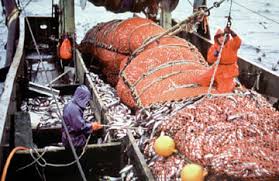
This is Fish Radio. I’m Laine Welch – Alaska’s seafood industry impacts go far beyond the state. Updated numbers after this –
The Alaska Marine Safety Education Association offers free ergonomics training to seafood processing workers and fishermen to reduce injuries and increase productivity. Visit www.amsea.org to schedule a training at your plant or vessel.
Federal grants are available to help “Made in America” companies compete with imports and save US jobs. Learn more at www.nwtaac.org.
Oil and gas might be the big Kahuna, but Alaska’s seafood industry still directly employs more people than any other private industry in the state, and jobs, earnings and harvests showed good growth through 2014. That’s the breakdown in a report by the Juneau-based McDowell Group for the Alaska Seafood Marketing Institute.
Called the Alaska Seafood Impacts report, it combines yearly averages for 2013 and 2014. Here are some highlights:
Alaskans harvest more seafood than all of the other US states combined.
One fifth of Alaska’s private sector economy is seafood-based. The industry directly employs roughly 60,000 workers in Alaska each year. The catches from 8,618 vessels add $6 Billion in economic output each year.
On the processing side, Alaska has 176 shore based plants, 73 at-sea catcher processors and more than a dozen floating processors.
By species, salmon provides for the greatest economic impacts in terms of jobs, incomes and total value each year. And get this: Alaska salmon’s contribution to the national economy includes roughly 38,400 full time equivalent jobs and just under $2 Billion in annual labor income.
Pollock, the nation’s largest US fishery by volume, is a close second. Halibut, sablefish and crab account for only 2 percent of total Alaska seafood volume, but those three account for 18-20 percent of the industry’s labor income.
Southeast Alaskans own the most boats and seafood accounted for 20 percent of the region’s monthly employment. One third of Alaska resident fishermen live in South-central, more than other region, with Cordova and Anchorage leading for first wholesale values.
Kodiak provides 11 percent of Alaska’s total fish harvests and 8 percent of total processing. For the Bering Sea and Aleutian Islands, 53 percent of the region’s value comes from pollock.
By far, most of Alaska’s seafood goes to market as whole, headed and gutted at 36 percent, followed by fillets at 22 percent. Canned products were just 6 percent of total wholesale seafood value.
The Alaska Seafood Impactsreport is on ASMI’s home page and find links atwww.alaskafishradio.com
Fish Radio is also brought to you by Ocean Beauty Seafoods. Ocean Beauty has contributed over 10 million meals to the U.S. Food Bank network, and is committed to ending hunger in America.www.oceanbeauty.com In Kodiak, I’m Laine Welch.
ALFA's Annual Fish Raffle is Here! Buy Your Tickets Now!

Check out updates on SEASWAP
The Southeast Alaska Sperm Whale Avoidance Project have updated their website. Check it out at: http://seaswap.info/
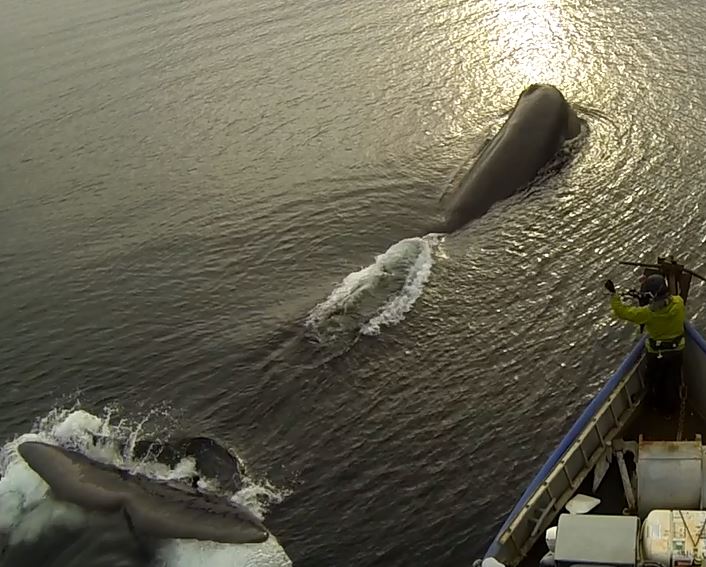
Photo credit: SEASWAP
News from around and outside the State
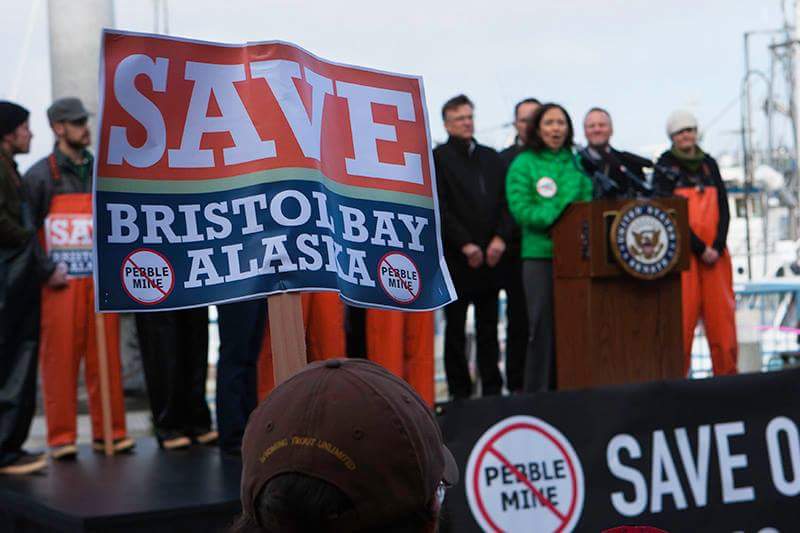
"While salmon fishermen are hard at work, House Republicans are holding a hearing on opening the Pebble Mine, which would have devastating and irreversible impacts on Bristol Bay Salmon and the fishing jobs that depend on them..."
See posting from Senator Maria Cantwell here
2016 EM Cooperative Research Participants - Pre-register NOW
If your vessel is currently on the 2016 Opt-In list to participate in the EM cooperative research program:
Vessels participating in this program in 2016 need to register in advance of the next EM fishing period. In each fishing period, 30% of the vessels that are pre-registered will be selected and required to carry an EM system.
If you plan on fishing in the next EM fishing period, July to October of this year, please pre-register by replying to Liz Chilton no later than May 31, 2016. Once we have completed the selection process and if your vessel was selected to carry an EM system, we will contact you to connect you with the EM system provider.
Thanks for your continued cooperation and participation in this cooperative research program.
* An email was sent with almost the exact same wording to those vessel owners registered. That email was the Observer Program's initial attempt to communicate with the 2016 EM participants using Constant Contact. They plan to continue using this service for future communications to the fleet about the electronic monitoring program. Please contact Liz Chilton at 206-526-4197 with questions about that email service.
Sustainable Seafood Boom Brings Hope to an Overfished Planat
The following article comes from the Huffington Post:
Sustainable Seafood Boom Brings Hope To An Overfished Planet
Think your choices have little impact on our ailing planet? Think again.
A new report about the surge of the global sustainable seafood market this month reveals how consumer and corporate decisions could significantly move the needle when it comes to tackling the world’s environmental woes.
The International Institute for Sustainable Development report found more than 23 metric million tons of seafood certified as sustainable — worth $11.5 billion — was sold worldwide last year.
Full article, with pictures, is here: http://www.huffingtonpost.com/entry/sustainable-seafood-market-growth_us_573c340de4b0646cbeeb858a
Longline Hauler for Sale
- 17 inch Nordic convertible longline hauler
- Includes a bronze idler wheel with extra heavy duty galvanized steel collar to mount to the mast or other mounting stand and two cookie cutter wheels.
- $5,000 or best offer
- Call Ken 907-738-2682
Web-based business tools designed specifically for commercial fishermen
Dana Morse (ME Sea Grant), Sunny Rice (AK Sea Grant) and Curtis Mahnken from University of Minnesota will provide a tour of two new web-based business tools designed specifically for commercial fishermen on Friday, April 22 @ 3:00pm ET.
You can Join the webinar at https://connect.extension.iastate.edu/marine
Sign in as a “guest” (no password needed).
Let Erik know if you have questions:
Erik Chapman, PhD Extension Faculty/Specialist, Fisheries University of New Hampshire NH Sea Grant/Cooperative Extension 164B Morse Hall Durham, NH 03824 Tel: 603-862-1935
The Economist features an article on ALFA's bycatch and habitat mapping work
Click here to read the article "How Alaska's smaller boats compete with vast trawlers."